
Robotics and the Redefinition of CAPEX in Pharmaceutical Manufacturing
Pharma Manufacturing Under Pressure
Across the pharmaceutical industry, production models are being challenged by increasing product sophistication, stricter regulatory expectations, and the need for greater flexibility in how capacity is deployed.
These pressures are visible across all segments. Biologics require tighter process control and sterile environments. Advanced therapies introduce highly sensitive, multi-step workflows. Even traditional production lines face rising expectations in terms of traceability, speed, and reliability.
The underlying issue is structural. Manufacturing systems historically designed for stability are now expected to operate under constant change. As a result, companies are facing rising costs, difficulties in scaling production, and greater exposure to quality and compliance risks.
This gap between what production lines were conceived to deliver and what they are now required to support is widening. Robotics is emerging within this context as a way to create a new paradigm and regain control over increasingly complex production settings.
When Manufacturing Defines the Product
This transformation becomes tangible in how pharmaceutical companies are redesigning production systems around robotics.
Cell and gene therapies provide a clear illustration. Their production relies on advanced biological processes that remain heavily manual and difficult to scale. Each step introduces potential deviations, and as volumes increase, these translate into higher costs, inconsistent quality, and limited throughput. AstraZeneca’s decision to build a large-scale cell therapy manufacturing site in Shanghai reflects the extent to which scaling these therapies requires a rethinking of production models.
At the process level, robotics is already reshaping execution. In December 2025, the Japanese Astellas Pharma received an FDA Advanced Manufacturing Technology designation for its “Maholo” robotic cell culture system. By combining robotics and AI, the platform automates biological workflows while improving reliability, product quality, and development timelines. These dimensions directly influence therapeutic outcomes.
The shift extends beyond single processes. The collaboration between AstraZeneca and Multiply Labs is testing end-to-end robotic manufacturing environments, where multiple steps are executed in parallel using coordinated robotic units. These process networks are designed to function with minimal human intervention while maintaining compliance with Good Manufacturing Practices (GMP).
At the facility level, the same logic is being scaled. In January 2026, Cellares raised $257 million to deploy fully automated “smart factories” dedicated to cell therapy manufacturing. Robotics, software, and standardized processes are put together into unified models designed for high-throughput, reproducible production.
Across these examples, a consistent pattern is being deployed: production is being reorganized so that robotics, software, and process design are associated within efficient systems. The manufacturing architecture becomes a determinant of therapeutic viability.
Robotics is Reshaping what a “Factory” is
Traditional pharmaceutical facilities are built around sequences of equipment, each optimized for a defined task. Robotics introduces a different organizing principle, with production becoming an orchestrated structure where:
- multiple robotic units operate simultaneously
- processes are coordinated through software layers
- performance is continuously adjusted through data
Concrete implementations illustrate this shift. In the case developed by Multiply Labs, robotic arms operate in parallel on existing instruments, increasing output without requiring a complete redesign of facilities. In the model deployed by Cellares, factories are conceived as platforms where manufacturing and quality control are embedded within a unified workflow.
This evolution adjusts the nature of industrial assets, making sure that the performance of a production unit depends on:
- its ability to combine with software systems
- its capacity to operate reliably under changing conditions
- its role within a broader, interconnected manufacturing facility
CAPEX Reimagined: when Robotics Redefines what Companies Invest in
As production systems evolve toward robotics-driven constructions, the logic implemented to evaluate manufacturing investments is changing as well.
Industry dynamics confirm this evolution. According to a recent analysis by BCG, biopharma companies are simultaneously facing margin pressure and rising manufacturing complexity, forcing them to rethink how capital is allocated and prioritized across production networks.
Capital is now directed toward enabling control, flexibility, and scalability. Large-scale commitments to manufacturing capacity continue to grow, but they are progressively getting linked to facilities designed around automation and digital integration. In 2025, disclosed investments in pharmaceutical contract development and manufacturing organisation reached $24.86 billion, with new sites often built around advanced manufacturing technologies rather than traditional linear production lines. The pharmaceutical manufacturing equipment market projections reinforce this trajectory, with continued growth driven by the expansion of biologics and the need for controlled, traceable production environments.
At the same time, demand for robotics in pharmaceutical manufacturing is accelerating. Robot orders in life sciences increased by 22% year-over-year in 2025 according to the Association for Advancing Automation (A3), reflecting a broader change toward automation to improve quality and reduce operational risk.
Therefore, robotics market forecasts highlight robust growth potential: the global pharmaceutical robots’ market is projected to increase significantly through the next decade, driven by growing automation in drug production and quality processes.
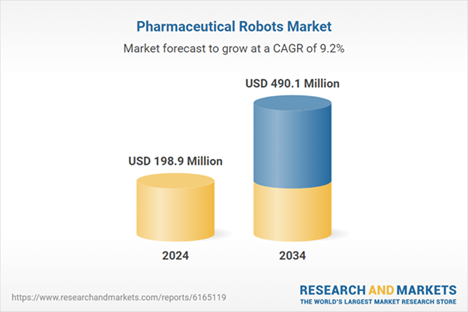
This transformation can be observed through a reconfiguration of how pharmaceutical companies design, deploy, and evaluate manufacturing investments.
- From discrete assets to integrated production platforms
Conventional CAPEX approaches have focused on individual assets – production lines, equipment, or facilities. In a robotics-driven contexts, value shifts toward interconnexion and coordination between execution, traceability, and process control.
Platforms such as the Maholo system illustrate this transition. These environments combine robotics, software, and data capitalising on the interaction of multiple components rather than the efficiency of a single machine.
As a result, CAPEX considerably targets production architectures. Investment decisions are based on the performance of these entire systems.
- Modular scaling and phased investment
Robotics also changes how capacity is scaled. Instead of building fixed infrastructure designed for a specific product profile, companies can deploy modular production units that evolve with their pipeline.
Flexible robotic cells can handle multiple products, provide different formats, and relate to digital systems that support real-time decision-making. As an example, these solutions are a key driver for next‑generation aseptic production, enabling pharmaceutical facilities to adapt to multiple products and formats without lengthy mechanical changeovers.
This approach enables a different investment logic:
- capital can be deployed incrementally
- capacity can be expanded without large upfront commitments
- assets can be reconfigured as demand shifts
CAPEX is therefore evaluated in terms of adaptability over time.
- Digital layers as part of capital investment
Robotics is inseparable from the digital infrastructures that control it: sensors, data capture, and software orchestration are essential.
Advanced robotics leverage multi‑axis movement, analytics‑enabled decision support, and digital backtracking to meet safety, quality, and compliance requirements.
This integration has two direct implications for CAPEX:
- Software and data infrastructure now matter as much as hardware – investments must fund both physical robots and the digital platforms that make them effective.
- Return on investment must account for the contribution of digital controls to consistency, traceability, and regulatory compliance.
Manufacturing investments adapt accordingly, with capital allocated to workflows rather than on individual machines.
- Changing risk profiles and investment horizons
Traditional pharmaceutical manufacturing assumptions – stable products, predictable demand, long asset lifecycles – are giving way to more dynamic conditions. Product portfolios evolve more rapidly, regulatory expectations continue to increase, and production systems must adapt accordingly.
Therefore, automation becomes a mechanism for managing uncertainty. Industry leaders are prioritizing investments that improve resilience. The wider adoption of automation is seen as a risk‑mitigating mechanism that supports compliance and reliability across diverse production settings. In this sense, debates emphasize how digital and automated manufacturing improve operational efficiency and compliance in regulated frameworks.
Implications for Strategic CAPEX Decisions
In pharmaceutical manufacturing, robotics is redefining the fundamentals and the purpose of capital investment.
It expands what is considered an asset, moving the focus from given equipment to integrated production processes. It clarifies the rationale for deploying capital, with priority given to flexibility, process reliability, and the ability to manage technical challenges at scale. It also reshapes how performance is assessed, placing greater emphasis on system-level outcomes, regulatory robustness, and long-term operational consistency.
For decision-makers, this translates into a more complete approach to CAPEX. Traditional metrics such as throughput or utilization remain relevant, but they are no more sufficient on their own. Investment choices depend on an infrastructure’s capacity to operate as a single organised entity, adapt, and sustain performance across evolving product portfolios and regulatory environments.
In this context, capital allocation becomes closely tied to manufacturing industrial frameworks. The ability to design coherent, data-enabled, and scalable production systems is progressively arising as a key driver of industrial performance and, ultimately, of effective therapeutic delivery.
INCONCRETO’s Perspective: Structuring Industrial Transformation through Robotics
The integration of robotics into pharmaceutical manufacturing is a structural transformation that affects how production systems are designed, how risks are managed, and how capital is deployed.
INCONCRETO supports organizations in navigating this transformation by connecting strategic intent with operational execution. This includes helping clients reassess manufacturing operating models, identify where robotics creates the most value, and align investment decisions with long-term industrial objectives.
By combining expertise in industrial platforms, digital integration, and organizational alignment, INCONCRETO enables companies to move beyond incremental automation. The focus is on building coherent, scalable production environments where robotics, data, and processes are unified.
Through this approach, clients can better control complexity, strengthen performance consistency, and ensure that capital investments translate into sustainable operational advantage.
For further reading, you may consult these sources:
- The Rise of Pharma Robots: Transforming Drug Manufacturing and Research, by Robotics Tomorrow
- New Collaboration to Automate Cell Therapy Manufacturing with Robotics, by The Medicine Maker
- Biopharma Trends 2026, by BCG
- What to Expect in Pharma Manufacturing in 2026: Industry Leaders Share Their Predictions, by PharmaSource
- Robot orders in life sciences, pharma up 22% in Q2 in push for operational efficiency, by Pharma Manufacturing
- Accelerating Pharma Manufacturing: Automation and Robotics in Pharma 4.0™, by iSpeak Blog
- The Role of CapEx Projects and Teams in Life Sciences Innovation, by Nes Fircroft
Latest News











© INCONCRETO. All rights reserved. Powered by AYM